The 5 most common mistakes that ruin goalkeeper gloves much faster than you think
If your goalkeeper gloves lose their performance too quickly, the problem may not be the quality of the gloves.
Many goalkeepers assume that when a pair wears out fast, it must simply be “poor quality.” In reality, premature wear is often caused by the way the gloves are used and maintained.
Here are five of the most common mistakes that significantly shorten the lifespan of goalkeeper gloves.
1. Using the same pair for both matches and daily training
Goalkeeper latex is designed to deliver maximum grip, but that performance comes at a cost: it wears down with use.
If you train four or five times a week and also use the same pair in matches, the palm will lose its performance much faster.
Pro tip: Keep one pair for matches and another for training sessions.
2. Playing on artificial turf with ultra-soft latex
Modern artificial pitches are extremely demanding on goalkeeper gloves.
Generally, the softer the latex, the better the grip—but it also tends to wear out more quickly when used regularly on abrasive surfaces.
If you mostly train on artificial turf, it's worth choosing gloves designed with greater emphasis on durability.
3. Pushing yourself up from the ground using your palms
This is one of the biggest causes of premature glove wear.
After making a save, many goalkeepers push their entire body weight off the ground using the palms of their gloves. This constant friction damages the latex without even involving contact with the ball.
A better technique is to rely more on your fists or the sides of your hands whenever possible.
4. Not washing your gloves after training
Dust, sweat and tiny particles remain on the palm and can affect both grip and the long-term performance of the latex.
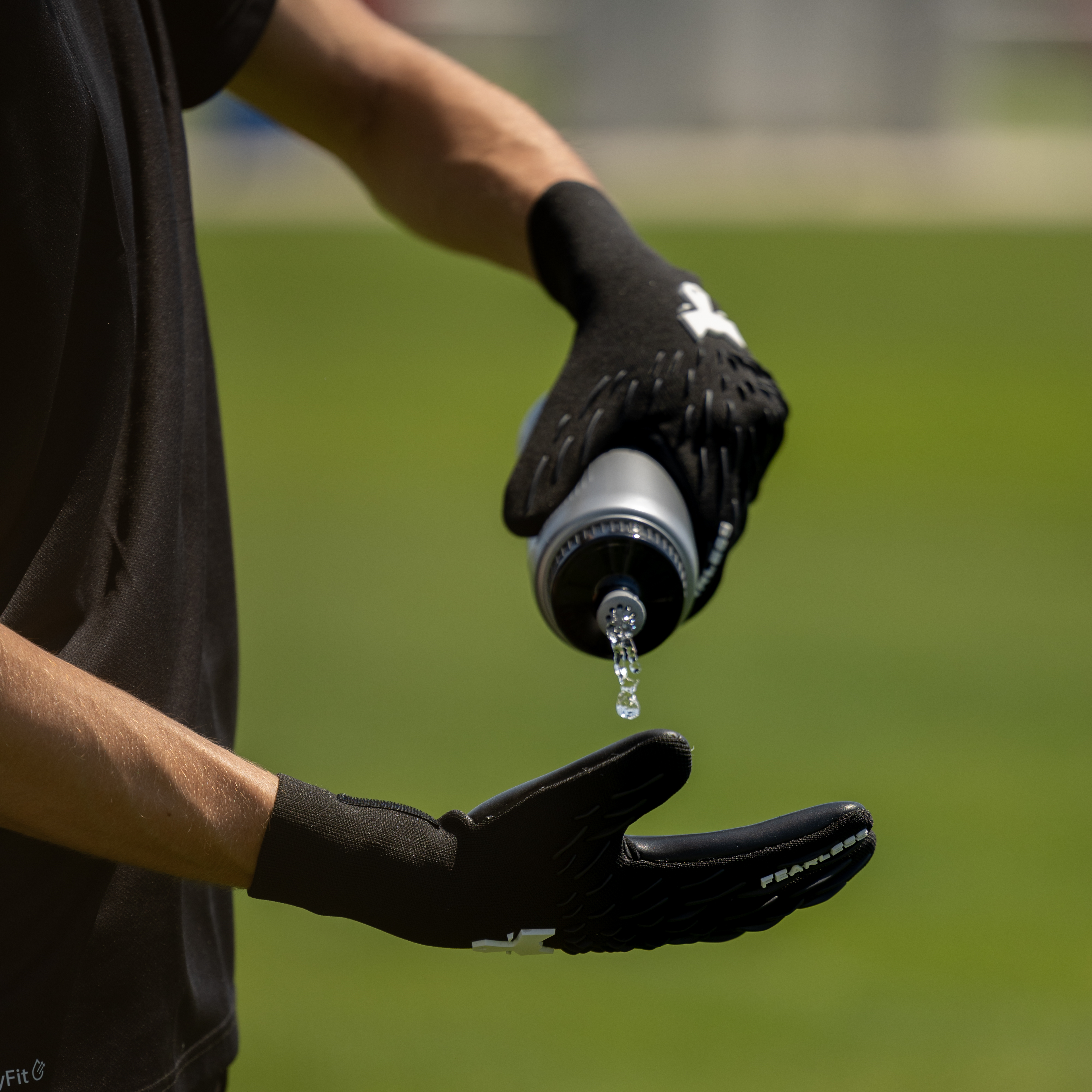
A gentle rinse with water or a dedicated glove cleaner after intense use helps preserve the glove's performance.
5. Choosing gloves based only on grip
Many goalkeepers buy gloves based solely on how “sticky” the latex feels.
In reality, the right choice depends on where you play, how often you train and what you expect from your gloves. A model that offers slightly less grip but significantly greater durability may be the better option for everyday use.
Is there a solution?
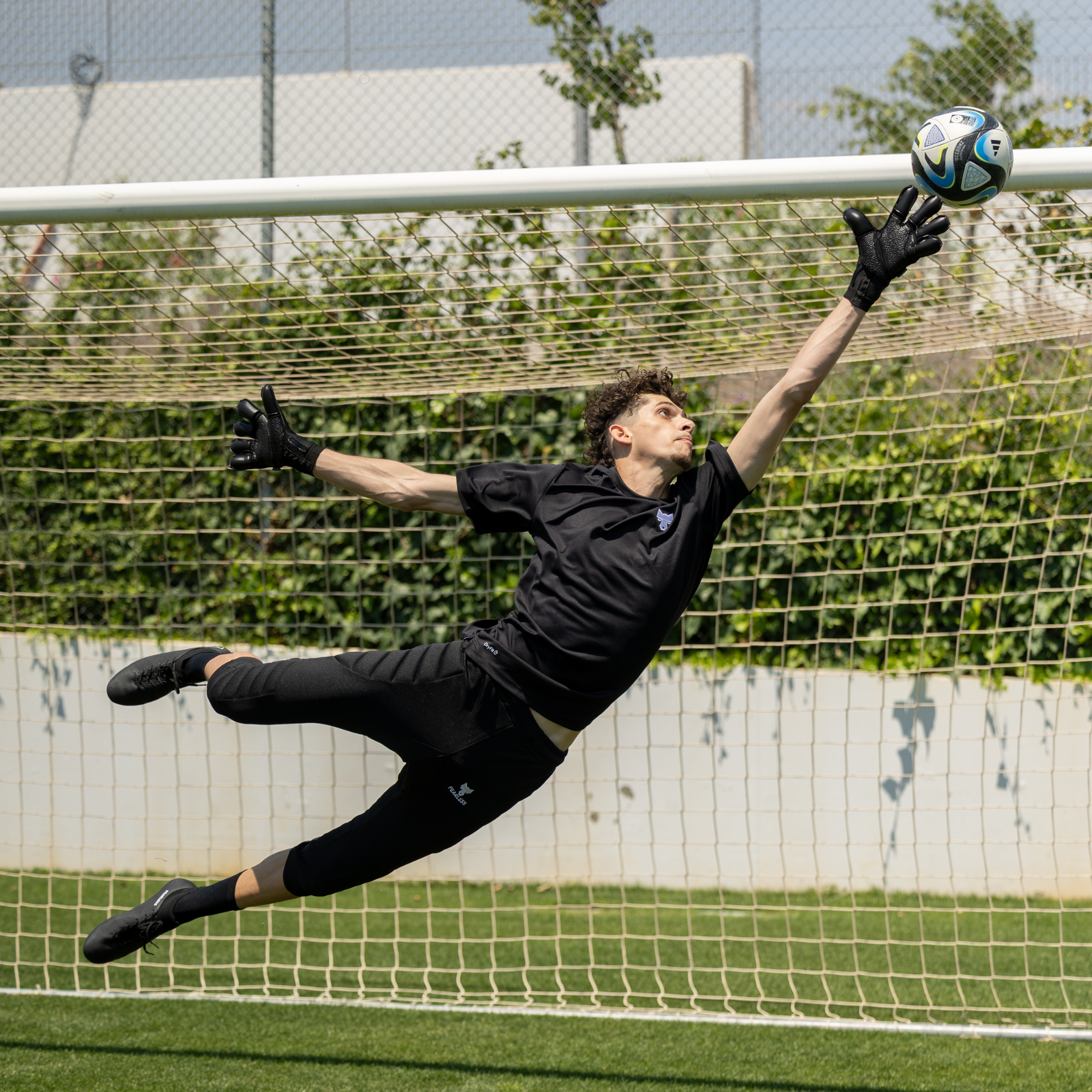
At Fearless Lab, we noticed something interesting: during most saves, goalkeepers make contact with the ball primarily using their fingers—especially the fingertips—to maximize control and grip.
At the same time, the greatest amount of wear doesn't usually occur there. Instead, it appears in the center of the palm, particularly from diving, getting up off the ground and repeated contact with abrasive surfaces like artificial turf.
That's exactly how the idea behind WOLF IronPalm was born.
Instead of using the same latex across the entire palm, we developed a hybrid construction:
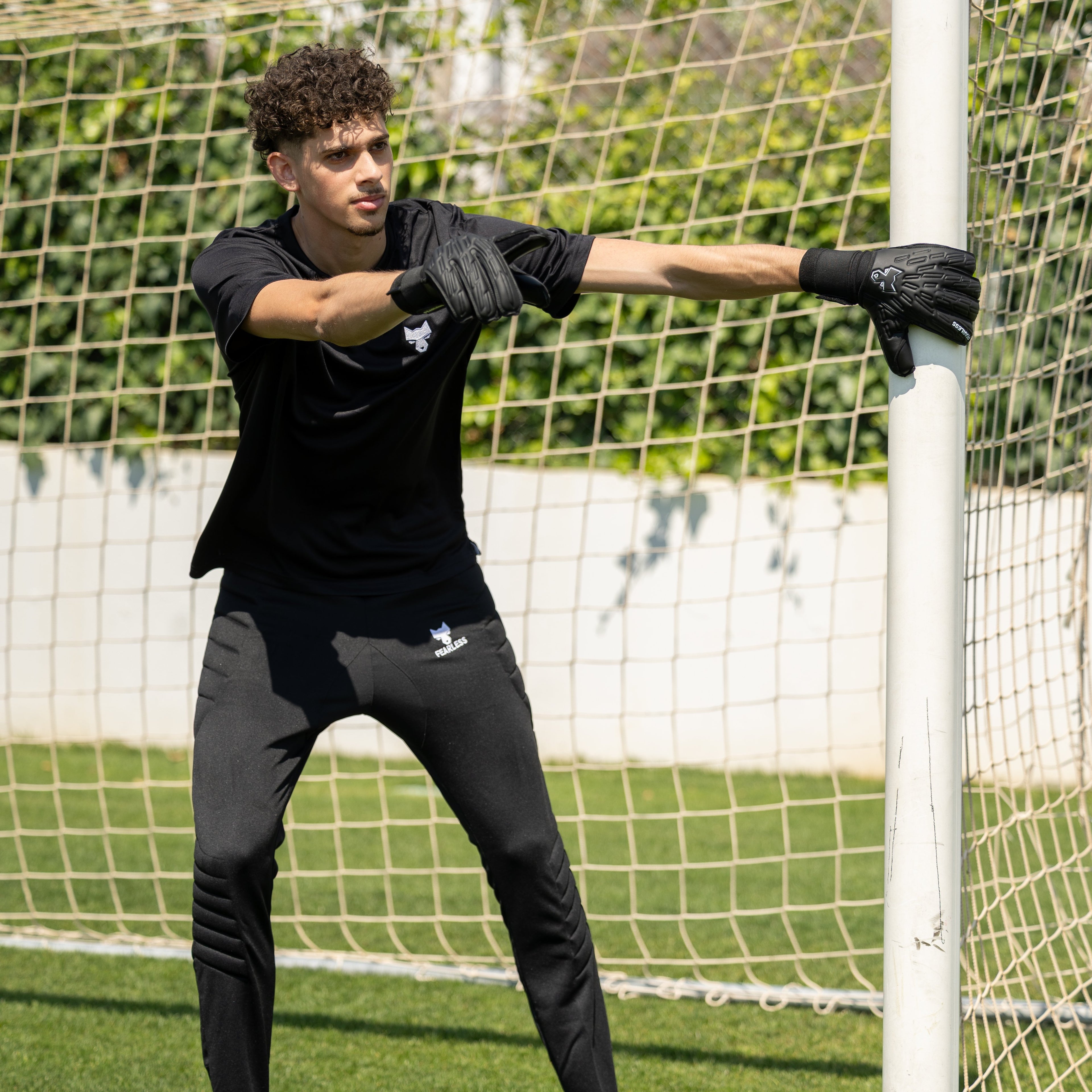
- On the fingers, where ball contact is most critical, we use EliteGrip+ latex for outstanding grip and feel.
- On the main palm area, where most of the stress and abrasion occur, we use our new HardGrip+ latex, engineered for exceptional durability and a significantly longer lifespan.
The result is a glove that maintains excellent ball contact where it matters most while offering far greater resistance to wear during demanding training sessions and on tough playing surfaces.
If you're looking for a goalkeeper glove that combines grip where you truly need it with durability where wear usually occurs, then WOLF IronPalm was designed for exactly that purpose.